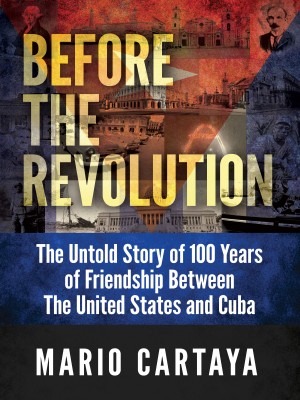
In Before the Revolution: The Untold Story of 100 Years of Friendship Between the United States and Cuba, author Mario Cartaya delivers an illuminating non-fiction review of the rich history linking two neighboring nations. Spanning from 1860 to 1960, Cartaya’s narrative challenges modern political tropes and post-1959 revolutionary censorship by resurrecting a forgotten era defined by alliance, economic synergy, and genuine goodwill. Through historical documentation and a focus on "the buildings left behind," Cartaya presents Cuba's architectural landscape as an open-air museum testifying to a century of vibrant, bilateral partnership.
The book dismantles the prevailing narrative that pre-revolutionary US-Cuban ties were defined solely by imperialist exploitation. Instead, Cartaya documents how diplomatic respect, commercial trade, and shared democratic values laid the foundation for an unprecedented golden age of mutual prosperity. From early territorial policies to the tragic rupture of diplomatic relations in 1961, Cartaya weaves archival evidence with personal family memories, bringing history to life with human warmth and narrative clarity.
Cartaya’s sweeping study illuminates several remarkable turning points in the long, intertwined history of the United States and Cuba. He traces how American leaders—guided in part by Thomas Jefferson’s 1823 principle rejecting the annexation of Cuba—consistently supported Cuban self‑determination throughout the nineteenth and early twentieth centuries. This commitment to Cuban independence became a defining thread in U.S. policy, shaping diplomatic decisions across generations.
The book also highlights moments of profound military partnership. During both World War I and World War II, Cuban and American forces fought as allies, demonstrating a shared resolve against global threats. One of the most striking examples is the Cuban patrol boat CS‑13, which famously sank the German submarine U‑176, a feat that underscored Cuba’s vital role in protecting Allied shipping lanes in the Caribbean. Cartaya uses episodes like these to show how cooperation between the two nations has repeatedly emerged at critical junctures, revealing a relationship far deeper and more complex than political rhetoric often suggests.
Driven by a gold-backed peso pegged to the US dollar, Cuba transformed into the world’s 29th-largest economy by 1958. The island became the global leader in sugar production—exemplified by Milton Hershey’s model company town—while boasting top-tier Latin American standards in literacy, healthcare access, and per capita income.
Cartaya’s narrative shines in its celebration of the vibrant cross‑cultural currents that have long connected Cuba and the United States. He traces how artistic, literary, and athletic traditions flowed freely between the two nations, creating a shared cultural landscape that transcended politics. The book explores the electrifying fusion of New Orleans jazz with Afro‑Cuban rhythms—a musical dialogue that helped shape modern Latin jazz and influenced generations of performers on both sides of the Florida Straits. Cartaya also highlights Ernest Hemingway’s enduring literary legacy in Havana, where the author found inspiration, friendship, and a creative refuge that left an unmistakable imprint on Cuban cultural memory.
Beyond music and literature, Cartaya underscores the deep mutual passion for professional baseball, a sport that became a bridge between communities, families, and national identities. Cuban players transformed the American game, while American teams and fans embraced Cuban talent with enthusiasm, creating a sporting tradition rooted in respect and shared love of competition. Through these examples, Cartaya illustrates how cultural exchange—whether through rhythm, storytelling, or sport—has continually strengthened the human bonds between the two nations, even during periods of political strain.
Cartaya’s historical analysis carries striking relevance for readers confronting today’s geopolitical tensions. By demonstrating that U.S.–Cuban relations were once grounded in mutual respect, shared prosperity, and genuine trust, the book effectively resets the historical compass. It offers a valuable blueprint for future diplomacy, showing how open trade, cultural exchange, and sustained human connection can build durable bridges where political rhetoric has long carved deep divides. Just as importantly, Cartaya preserves the legacy of the Greatest Generation—honoring the sacrifices, alliances, and ideals that shaped Cuban exile identity and continue to resonate with readers around the world.
Uncover the breathtaking, hidden history of an extraordinary alliance that shaped the Western Hemisphere and defined an era of golden prosperity! Before the Revolution is an essential, heart-stirring masterpiece that will forever transform how you view the shared destiny and future possibilities of the United States and Cuba.
Reviewed by: Paul M.
|